

Maintaining commercial and domestic coffee equipment requires precise chemical formulations to ensure longevity and beverage quality. For procurement managers, wholesale distributors, and curious consumers, understanding what goes into these maintenance products is essential. Experts recommend using only espresso machine-specific coffee detergents rather than generic household cleaners to protect the machine from internal damage and to prevent chemical residue from tainting the coffee.
This guide provides a transparent, manufacturer-level breakdown of what espresso cleaning tablets are made of, how their chemical components target stubborn coffee oils, and why specialized formulations outperform common household alternatives.
What Are Espresso Machine Cleaning Tablets Made Of?
At the manufacturing level, espresso machine cleaning tablets are formulated using a precise blend of alkaline builders, oxygen-based bleaching agents, and surfactants. These ingredients are compacted into solid forms, such as concentrated 2-gram tablets, which are formulated to remove grime from limescale, minerals, and oils that accumulate during the brewing process.
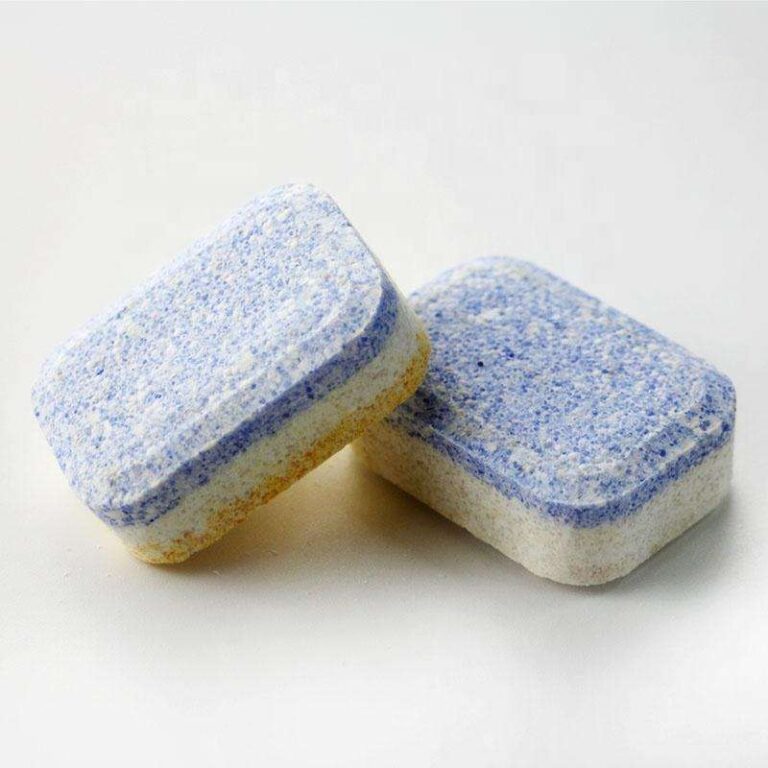
For transparency and safety, reputable manufacturers provide a Safety Data Sheet (SDS) detailing the chemical properties and handling instructions of their cleaning tablets. While proprietary blends vary, the core ingredients in our espresso machine cleaning tablets include:
- Sodium Percarbonate: An oxygen-based bleaching agent. When dissolved in hot water, it releases hydrogen peroxide and sodium carbonate, providing effervescent cleaning action that lifts stains and organic matter.
- Sodium Carbonate: Also known as washing soda, this acts as a water softener and an alkaline builder. It raises the pH of the cleaning solution, which is necessary to break down acidic coffee oils.
- Surfactants: These surface-active agents reduce the surface tension of water, allowing the solution to penetrate deep into the metal mesh and wash away the loosened oils and particulates.
In standard OEM formulations, these core ingredients are carefully balanced, with exact proportions often customized to client specifications (typically ranging around targets that depend on the formulation—our sales team can confirm the proportions, expressed as % for the active oxygen and alkaline base components). Some cleaning tablets and powders utilize an acid base to break down calcium and fat residues, depending on whether the product is intended as a dual-action cleaner or a dedicated degreaser.
How Core Ingredients Break Down Coffee Oils and Residues
Every time an espresso is extracted, the natural oils and fine particulates from the coffee beans pass through the brewing group. Cleaning tablets are specifically designed to remove coffee oils and residues from the shower screen and filter baskets. If left uncleaned, these oils oxidize, turn rancid, and create a bitter taste in subsequent extractions.
The chemical mechanism behind espresso cleaning tablets relies on a process called saponification. Because coffee oils are acidic and hydrophobic (water-repelling), plain hot water cannot dissolve them. When a cleaning tablet dissolves during a backflush cycle, the sodium carbonate creates a highly alkaline environment. This alkalinity reacts with the fatty acids in the coffee oils, converting them into a water-soluble soap.
Simultaneously, the sodium percarbonate releases oxygen bubbles that physically agitate the internal surfaces of the group head, lifting stubborn organic matter out of the microscopic pores of the shower screen. Finally, the surfactants bind to the newly saponified oils and suspended particulates, ensuring they are completely flushed out of the machine’s exhaust valve when the backflush cycle ends.
Cleaning Tablets vs. Descaling Agents: Understanding the Difference
A common point of confusion in coffee machine maintenance is the distinction between cleaning and descaling. While cleaning tablets focus on organic matter (oils and coffee grounds), descaling agents target inorganic mineral buildup (limescale and calcium) left behind by the water used for brewing.
Because they target different types of residue, they require opposite ends of the pH scale. Cleaning tablets are alkaline, whereas descaling agents are acidic. For instance, sulfamic acid is a stronger acid commonly used in commercial descalers compared to citric acid, making it highly effective at dissolving severe calcium deposits inside the boiler and heating elements.
Using a cleaning tablet will not remove limescale, and using a descaler will not effectively remove rancid coffee oils. For a more detailed comparison of these maintenance routines, you can read our guide on Espresso Cleaning Tablets vs Descaling Tablets: Which One Does Your Machine Need?
The Limitations of DIY Alternatives (Vinegar and Citric Acid)
Many buyers report that end-users frequently attempt to use household items to maintain their espresso machines to save money. A mixture of half white vinegar and half water is sometimes used by consumers as a substitute for commercial cleaners. Additionally, citric acid is frequently recommended on forums as a cheap, odorless alternative to vinegar for machine maintenance.
While these DIY solutions have their place in basic household cleaning, they possess severe limitations when applied to espresso machines:
- Ineffective on Oils: Both vinegar (acetic acid) and citric acid are acidic. Acids do not saponify fats. Therefore, they are highly ineffective at breaking down the stubborn coffee oils coating the shower screen and filter baskets.
- Lack of Surfactants: DIY mixtures lack the surface-active agents necessary to lift and carry away particulate matter from the brewing group.
- Potential for Damage: Prolonged use of incorrect acid concentrations can degrade rubber gaskets, silicone O-rings, and certain metal platings inside the espresso machine.
For proper maintenance, purpose-built alkaline tablets remain the only chemically sound method for removing coffee oils.
Eco-Friendly and Phosphate-Free Formulations
As regulatory standards tighten globally and consumer preference shifts toward sustainable products, the chemical composition of cleaning tablets has evolved. Historically, many industrial detergents relied heavily on phosphates to soften water and boost cleaning power. However, phosphates contribute to water pollution and algal blooms.
Today, eco-friendly cleaning tablet formulas are made from biodegradable, organic materials and are 100% phosphate-free and chlorine-free. These green formulations utilize safer chelating agents and plant-derived surfactants to achieve the same degreasing power without the environmental impact. For a closer look at the safety profiles of these modern ingredients, we recommend reviewing our article on Understanding the Safety of Coffee Machine Cleaning Tablets: A Deep Dive.
OEM and Wholesale Manufacturing of Coffee Cleaning Tablets
For B2B buyers, distributors, and private-label brands, sourcing reliable cleaning products requires partnering with a manufacturer capable of precise chemical compounding and consistent quality control. Oradess is a cleaning-products manufacturer based in Taizhou, Zhejiang, China, supplying wholesale and OEM/private-label products since 2019.
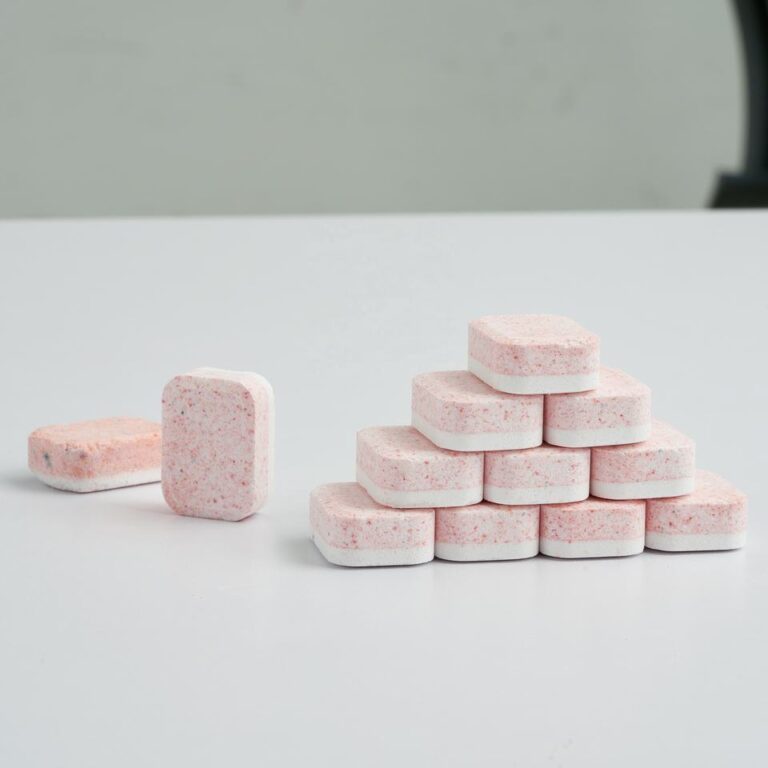
When manufacturing Espresso Machine Cleaning Tablets, the production process involves rigorous blending of the alkaline builders and oxygen bleaches, followed by high-pressure tableting to ensure the product dissolves at the correct rate during a backflush cycle. Tablets that dissolve too quickly will be flushed out before they can clean, while those that dissolve too slowly will leave gritty residue behind.
By understanding exactly what espresso cleaning tablets are made of, procurement teams can make informed decisions about formulation specifications, packaging, and compliance with regional chemical safety regulations.
FAQ
What are espresso cleaning tablets made of?
Espresso cleaning tablets are primarily made of alkaline builders (like sodium carbonate), oxygen-based bleaching agents (like sodium percarbonate), and surfactants. These active ingredients work together to saponify and lift stubborn coffee oils from the machine’s internal components.
What can you use instead of espresso cleaning tablets?
While some consumers use a mixture of half white vinegar and half water, or citric acid, these acidic DIY alternatives are not recommended for cleaning. They do not effectively break down coffee oils and lack the surfactants needed to wash away residues. It is always best to use dedicated espresso machine cleaning detergents.
What are espresso machine cleaning tablets made from?
They are made from concentrated chemical compounds designed specifically for coffee equipment. The formulas typically include a base of washing soda to raise the pH, an oxygen bleach to oxidize stains, and specialized surfactants to ensure the loosened oils and coffee grounds are completely flushed away.
Are coffee machine cleaning tablets safe?
Yes, when used according to the manufacturer’s instructions. Reputable manufacturers provide a Safety Data Sheet (SDS) for their products. Furthermore, modern eco-friendly formulas are made from biodegradable materials and are 100% phosphate-free and chlorine-free. A thorough rinse cycle ensures no chemical residue remains in the machine.
Are espresso cleaning tablets the same as descaling?
No. Cleaning tablets are alkaline and are designed to remove organic coffee oils and residues from the brewing group. Descaling agents are acidic (using ingredients like sulfamic or citric acid) and are designed to dissolve inorganic mineral buildup, such as limescale, from the boiler and heating elements.

